Saturday, January 11, 2014

Unit 3 – Day 4: South American Wines


In my last review I provided an overview of the top North American Wine Regions in the United States other than California (Washington, Oregon, and New York) as well as Canada and Mexico.

Ian Cauble MS and Eric Entrikin MS

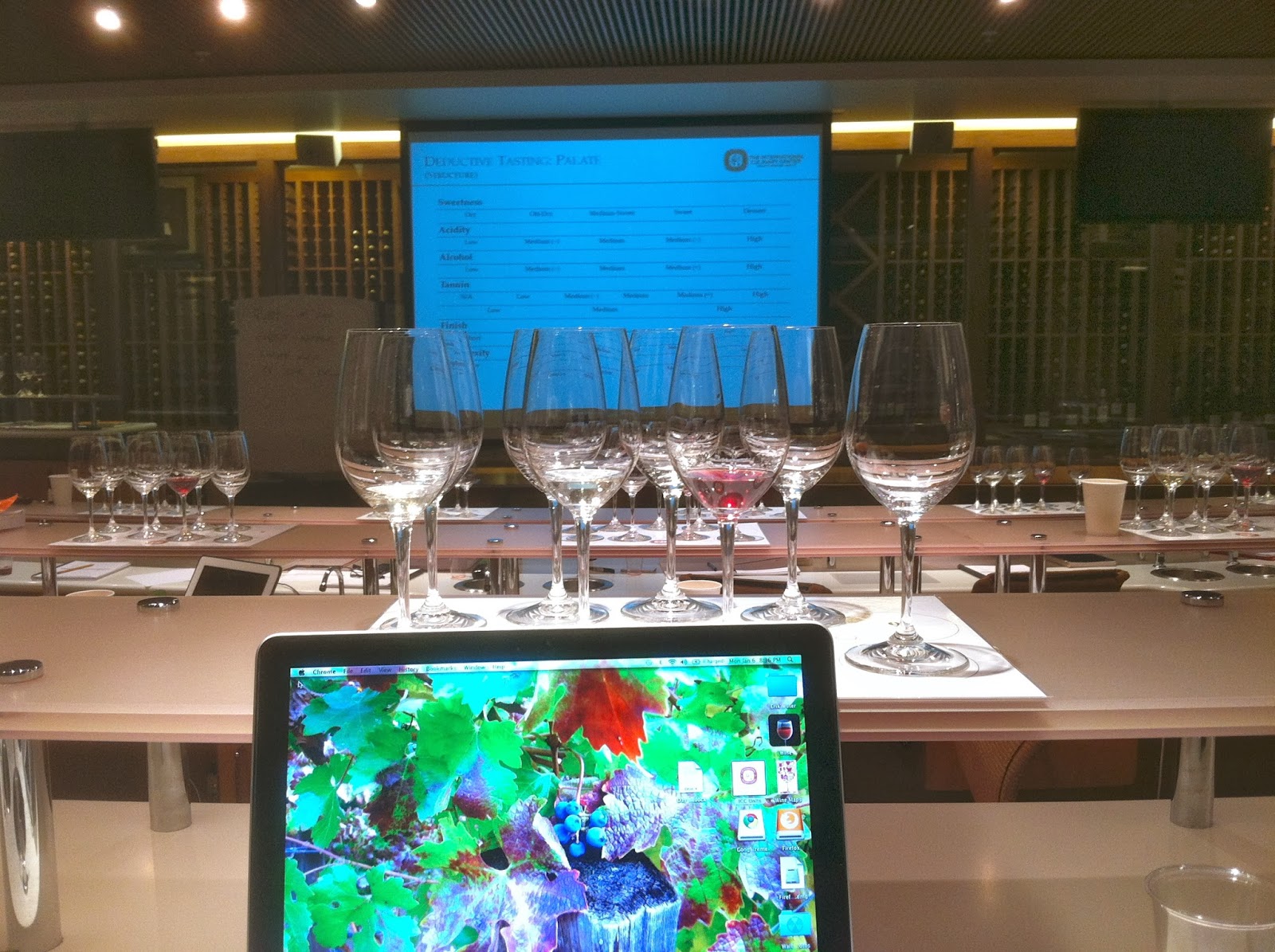
On the fourth day of Unit 3 in the Intensive Sommelier Training we studied the wines of South America. Our primary instructor for the day was Eric Entrikin MS but we also had a guest appearance of Ian Cauble MS, one of the Sommeliers in the documentary SOMM, who is coming on staff at the International Culinary Center in Campbell, California.


The Wines of Argentina


Argentina is the fifth largest producer of wine in the world, second only to the United States in the New World. The climate is mostly temperate to warm. Historically Argentina has had a prominent domestic wine culture due to its European heritage and their cuisine contains a lot of beef.


The first grapes planted in Argentina were probably Criolla (known as Pais in Chile and the Mission Grape in California), a varietal spread by Spanish missionaries.


The top red grapes are Malbec and Cabernet Sauvignon. In France Malbec has always been a minor player. Today Malbec is rarely used in Bordeaux and in Cahor where it is the dominant grape it typically only consists of about 70% of the blend. In Argentina Malbec tends to create rich purple wines that are concentrated in dark spicy fruit flavors.


Another major red grape is Bonarda (also known as Charbono in California) which is NOT the same grape as the Italian variety known as Bonarda Piemontese (Dounce Noir) grown in Piedmont, around Turin. Bonarda was once known in France as Corbeau de Savoie but it is rarely grown in France these days.


As with almost all other New World countries, Argentina’s wine laws are intended to be unrestrictive in order to allow growers the ability to experiment and explore as to what works best so there is no restriction as to which varieties can be planted or what winemaking methods can be used. With that Freedom, Argentinian winemakers grow several grape varietals that are either French or Spanish in origin. Most premium wines are labeled by grape variety and at least 80% used must be the listed grape and at least 85% of the grapes must have been grown in the listed region.


Mendoza is the most important wine region of Argentina which is located in the foothills of the Andes Mountains. It is responsible for nearly 70% of Argentina’s total wine production. It is a dry and sparse area and conditions are tempered by elevation which allows the grapes to ripen slowly developing intense and concentrate flavors. Most of the water is supplied by an ancient canal system.


Argentina’s top white grape is Torrontés which is a relative of the Malvasia family and it is typically aged in stainless steel rather than oak in order to maximize its fresh stone fruit and citrus characteristics. The country’s top region for Torrontés is in the northernmost region of Salta which is also home to the best Cabernet Sauvignon.


Just to the north of Mendoza are two notable wine regions, San Juan and La Rioja. While the region is capable of producing finer wines, most of it is dedicated to producing simple table wines for local consumption. Two other important regions that are on the rise are located south of Mendoza, Neuquén and Rio Negro. Their southern latitude produces a cool climate ideal for growing Chardonnay, Sauvignon Blanc and producing sparkling wines.


The Wines of Chile


Although wine production has existed in Chile since the 1500s it is only recently that it has had any significant impact on the international market. Chile is the tenth largest producer of wine in the world. Although its heritage is primarily Spanish, it is France that has a major influence on it wine production


Chile is an isolated country which has protected it from viticultural problems such as Phylloxera. The country is almost 3,000 miles long but on average it is only 100 miles wide. It has a temperate to warm climate with two main geographic features, the Pacific Ocean to the west and the Andes Mountains to the east. Most the population resides in the central valleys of Chile away from the desert conditions to the north and the Antarctic islands to the south.


The top growing region in Chile is the Central Valley (Valle Central) which has four sub-regions: Maipo Valley, Rapel Valley, Curicó Valley and Maule Valley. The northernmost wine regions of Chile include the warmest premium region, the Aconcagua Valley and the coolest premium region, the Casablanca Valley. In the south the two most important regions are the Itata Valley and the Bio Bio Valley.


The first grapes planted in Chile was probably Pais (known as Criolla in Argentina and the Mission Grape in California), a varietal spread by Spanish missionaries. Today it makes up 20% of the country’s red wine production.


The top red grapes are Cabernet Sauvignon and Carmenère, the “Lost grape” of Bordeaux. Phyloxera has wiped out this grape in Bordeaux. In 1995, at the request of a small group of Chilean winemakers, requested that their Merlot vines be DNA tested by researchers at U.C. Davis and it was discovered that it was actually Carmenère.


Chile has some unique wine laws. While they use similar wine laws to the United States, if a grape appears on the label of a wine is intended to be exported it must have at least 85% of the grape, 85% of the vintage and have 85% must have been derived from the stated region. If it is intended for domestic consumption only 75% is required for the grape, vintage and region.


The top white grape is Chardonnay made in a New World style with heavy use of oak and malolactic fermentation. Sauvignon Blanc is also growing in popularity and most of the plantings are in the Central Valley. Recently it was discovered that much of the grape that was thought to be Sauvignon Blanc is actually Sauvignon Vert, a lower quality clone of the grape.


The Wines of Uruguay


Uruguay is between Argentina and Brazil on the Atlantic Coast of South America. The first vines were planted about 250 years ago and its heritage and wine history is similar to Argentina. While there are over 300 wines in Uruguay most do not presently export their wines. Unlike Chile and Argentina, there are no mountains – only fertile rolling hills located between the 30th and 35th latitude. Most of the wine produced is near the capital city of Montevideo and focuses on single varietals such as Chardonnay, Merlot, Cabernet Sauvignon and Tannat – the most important grape grow in Uruguay.


Learning Objectives of Unit 3 – Day 4: South American Wines


At the beginning of class lectures a list of learning objectives is provided to the students. By the end of the class, the students should have a certain degree of understanding from their own reading and the lectures and be able to provide the answers to list of questions. The Learning Objectives for Unit 3 - Day 4 along with the answers are as follows.


By the end of class, students should be able to:


(1)  Name the region Casablanca is within and what wines the area is known for

Answer: Chile

(2)  Name the region Maipo is within and what wines the area is known for

Answer: Central Valley, Chile

(3)  State what is unique about the vines in Chile

Answer: The are planted on their own native root stock because the area has never been affected by Phylloxera.

(4)  Name the obscure Bordeaux variety that is important in Chile

Answer: Carmenère

(5)  State the minimum % for varietal labeling in Chile

Answer: 85% for exporting wines, 75% for domestic consumption

(6)  Name the most important region and grape of Argentina

Answer: Mendoza, Malbec

(7)  Name the 4 sub-regions of Valle Central

Answer: Maipo Valley, Rapel Valley, Curicó Valley and Maule Valley

(8)  Name the most important grape of Uruguay  

Answer: Tannat

(9) Describe the attributes of any wines tasted today

Answer: See below


The Wines


On the fourth day of Unit 3 we tasted the following wines:


1. 2012 Max Reserva Errazuriz Sauvignon Blanc, Casablanca Valley, Chile


This is a clear white wine, straw in color, low concentration with medium viscosity. On the nose it is clean with moderate+ intense aromas of jalapeno, bell pepper, green apples, grapefruit and chives. On the palate the nose is confirmed, it is dry with some residual sugar, it has medium+ acidity, medium body, medium+ alcohol and a medium length finish. In many ways this wine seems like a cheap Sauvignon Blanc from New Zealand, but on steroids. It is the greenest white wine I have ever experienced and the chive notes almost dominate the finish leaving in your mouth the taste of onions. Unless you just want to shock your senses with an over-the-top green wine I’d have to give it a major “pass.” This wine sells for around $15 per bottle.


2. 2012 Susana Balbo, Crios, Torrontés, Mendoza, Argentina


This is a clear white wine, straw in color, low concentration with medium viscosity. On the nose it is clean with moderate intense aromas of oranges, canned fruit, floral soap, and dry grass or hay. On the palate it has flavors of canned fruit cocktail, orange peel, and a steely minerality. It is dry with a hint of residual sugar, it has medium+ acidity, medium body, medium+ alcohol and a medium+ length finish. This wine sells for around $15 per bottle.


This wine may not sound all that appealing, but out of the dozen or so Torrontés that I have experienced this is one of the better ones. This is not a big selling grape so if a store even carries Torrontés the selection tends to be very low. So, if you want a wine that pairs well with salads this will work well, especially if there is fruit in it.


3. 2011 Viña Ventisquero Carménère, Grey, Colchagua, Chile


This is an opaque red wine, it is ruby in color at the core, medium+ concentration with minimal variation at the rim, with medium+ viscosity and tears that stain the glass. On the nose it is clean, youthful, with moderate intense aromas tart cherries, bell pepper, cedar, clay and a hint of wool. On the palate it is dry with flavors of black currants, black cherries, cedar, with minor notes of dried herbs and bell pepper. It has medium+ tannins but is soft on the mid palate, medium acidity, medium+ alcohol and a medium to medium+ length moderate complex finish. If tasted blind this wine could be mistaken for a Cab Franc and it sort of seems like a Chinon on steroids. This wine sells for around $18 to $20 per bottle.


4.  2010 Familia Zuccardi, Malbec, Mendoza, Argentina


This is an opaque red wine that is purple at the core, medium+ concentration to ruby with minimum rim variation and medium+ viscosity and tears that stains the glass. On the nose it has moderate intense aromas of cooked blueberries, IHOP Boysenberry syrup, non-roasted coffee beans and dusty cocoa. On the palate it is fruit driven with concentrated blueberries, dark chocolate and black licorice. It is dry with some residual sugar, it has medium+ tannins, medium acidity and medium+ to high alcohol and a medium+ length finish. This wine is 100% Malbec and it sells for around $17 to $20 per bottle.


5. 2011 Amancaya Malbec Gran Reserva, Mendoza, Argentina


This is an opaque red wine, dark purple at the core with minimal rim variation with medium+ viscosity. On the nose it is clean with moderate intense aromas of blueberries, black currants, cooked blackberries, black licorice, dark chocolate, damp potting soil and tobacco leaf. On the palate is fruit driven with blueberries, black currants and dark chocolate. It is dry with some residual sugar, it has medium+ tannins, medium+ acidity and medium+ to high alcohol and a medium+ length finish. This wine is a blend of 70% Malbec and 30% Cabernet Sauvignon and I found it to be a little more complex than the previous wine, undoubtedly due to the addition of Cab Sauv. This wine sells for around $15 per bottle.

6. 2010 Cousiño Macul “Antiguas Reservas” Cabernet Sauvignon, Maipo Valley, Chile


This is an opaque red wine, dark ruby at the core with moderate concentration, moderate rim variation with a hint of garnet and medium+ viscosity. On the nose it is clean, moderately youthful with intense aromas of black currants, bay leaves, dried herbs and cocoa. On the palate it has flavors of black cherries, black currants, cocoa and a hint of oak. It is dry with some residual sugar, moderately complex with medium+ tannins, medium+ alcohol, and a medium length finish. This wine sells for around $14 per bottle.


7. 2009 Lapostolle, Clos Apalta, Rapel Valley, Chile


This is an opaque red wine, dark purple at the core with medium+ concentration and minor rim variation and medium+ viscosity. On the nose it is clean with aromas of blackberry pie, black cherry, tobacco, brown sugar, cedar and vanilla. On the palate it is powerful and fruit driven with flavors of black currants, black cherries, sweet pipe tobacco, potting soil, and brown sugar. It is dry with residual sugar, medium+ acidity, medium+ to high tannins, high alcohol, moderately complex with a medium length finish.  This wine is a blend of 57% Carmenère, 34% Cabernet Sauvignon
and 9% Merlot
. It sells for around $60 to $80 per bottle. The most well known wine critics give this wine 93 to 96 points but I think it is over rated. If you want a wine this type of profile there are plenty in Lodi that sell for $20 to $30.


Observations


I have only experienced a few Sauvignon Blancs from Chile and most of them were barely drinkable. I really liked the Torrontés and I’ll probably buy some to enjoy next summer. The Carmenère was okay and fairly priced as was the Cabernet Sauvignon from Chile and the Malbecs from Argentina. The Lapostolle was unimpressive, "over the top" and over priced. I was disappointed that we didn’t experience a single wine from Uruguay as I was looking forward to trying a Tannat, so I’ll have to hunt around and see if I can find one.

Wednesday, January 8, 2014

Unit 3 – Day 3: North American Wines


In my last review I provided an over view of California’s wine history, the revival of its wine culture, some of its current challenges and the origin of California’s unofficial state grape - Zinfandel. After studying California the Intensive Sommelier Training class had a much-needed two-week break for the holidays. When they call this class “intensive” they are not kidding! There are so many wines to remember and so much information from the text books and lectures to retain it was nice to take a breather and let it sink in. So, during the vacation I spent most of my time studying.

In this review I’ll discuss the three other top wine producing areas in the United States (Washington, Oregon and New York) as well as Canada. I’ll then cover the learning objectives and review the 9 wines we tasted in class.

The Facts on Washington Wine

Although grapes were first planted in Washington in the early 1800s it was not until the 1950s that the once barren landscape of eastern Washington was transformed by irrigation from the Columbia River. Afterwards two large wineries, Columbia Winery and Chateau Ste. Michelle, were founded and they remain the dominate businesses in what is now the second largest wine producer in the country. With the exception of a few small wineries in the Puget Sound AVA, the vast majority of vineyard land is found east of the Cascade Mountains around the 46th and 47th parallel of latitude which is roughly equivalent to that of Bordeaux. The top white grape is Chardonnay, the top red grapes are Cabernet Sauvignon and Merlot.

The top region is the Columbia Valley. In fact, the Columbia Valley AVA is home to more than 90% of Washington’s vineyard acreage. Within the Columbia Valley AVA there are 8 sub-AVAs including Columbia Gorge AVA, Horse Heaven AVA, Rattlesnake Hills AVA, Red Mountain AVA, Wahluke Slope AVA, Walla Walla Valley AVA, and Yakima Valley AVA.

Washington is also the only state in the country where the designation “Reserve” is regulated. To have this on a label the wine must be the highest quality produced and it cannot exceed more than 10% of the wineries total production.

The Facts on Oregon Wine
Oregon has a temperate to cool climate and they receive 8-9 months of rain due to the influence of the Pacific Ocean and the Cascade Mountains. The top white grape is Pinot Gris and the top red grape is Pinot Noir. Winemaking laws are stricter in Oregon than what is required by the Federal Government as wines listing the grape variety must contain at least 90% whereas the rest of the country is only required to have 75%. The only exception is Cabernet Sauvignon based wines which are only required to follow the 75% rule. 
Northern Oregon is home to the state’s top region, the Willamette Valley, which stretches from Eugene to Portland. Within the valley there are 6 sub-AVAs – Chehalem Mountain AVA, Dundee Hills AVA, Eola-Amity Hills AVA, McMinnville AVA, Ribbon Ridge AVA and Yahill-Carlton District AVA.

The Southern Oregon AVA covers the remainder of the state and it includes 3 official sub-AVAs – Rogue Valley AVA, Umpqua Valley AVA, Applegate Valley AVA and one yet to be officially sanctioned, the Illinois AVA.

In the eastern portion of the state there are 4 AVAs that cross over into Oregon from other states. Areas of Washington’s Columbia Valley, Columbia Gorge and Walla Walla Valley AVAs as does the Snake River AVA of Idaho but production is very limited on the Oregon side of these AVAs.

The Facts on New York Wine

New York ranks third among the wine-producing states although 83% of New York's grape area is Vitis labrusca varieties (mostly Concord).

Premium production areas are based in 3 major wine-growing regions, including Lake Erie AVA on the western end of the state, the Finger Lakes AVA in the west-central area, the Hudson River Region AVA in eastern New York, and the eastern end of the Long Island AVA. German style winemaking is the norm in the Finger Lakes and Riesling is the most important grape variety. Long Island is focusing on Chardonnay, Cabernet Sauvignon and Merlot.

The Facts on Canadian Wine

The Canadian wine industry is regulated by the Vintners Quality Alliance (VQA) which began as a voluntary organization in the 1980s. It is made up of winemakers, wine writers and government officials and their original goal was to establish a system of official winemaking appellations. In the 1990s the VQA spread throughout most of Canada.

The two best-known provinces for wine production are Ontario and British Columbia. There are several wine regions in Ontario including the country’s most important and largest viticultural area: the Niagara Peninsula. While there are several styles of wine being produced the most significant is Ice Wine which is Canada’s most prominent wine. British Columbia is Canada’s most western province and most of it is, like the rest of the country, too cold for wine production. However, the province is home to the oldest and most important wine region in the province of the Okanagan Valley. At roughly the same latitude as Champagne or central Germany, this region experiences a temperate climate due to the lack of precipitation caused by its high-desert conditions. Wine production centers on the international grape varieties including Chardonnay, Pinot Gris, Merlot, Cabernet Sauvignon and Pinot Noir.

The Facts on Mexican Wine

Mexico was home to the first vineyards in the Americas, as Spanish missionaries arrived in the wake of the conquest of the Aztecs bringing with them grape seeds to grow vines for sacramental wines. Upon assuming the governance of Mexico in the late 1500s, the first Spanish ruler, Hernando Cortez, decreed that all new arriving Spaniards be given wine holdings of land. Wine production quickly followed and eventually the quality was so high that the Spanish crown outlawed its production in order to protect Spanish winemakers. Through independence and revolution wine production continued but much of it was distilled to make brandy.

Today most of the production is of lesser quality intended for bulk consumption but there are some premium wineries that are making more quality wine. The country’s top quality wineries are located in the Valle de Guadalupe. It has a Mediterranean-type climate due to the cooling winds from the Pacific Ocean. The top white wines are Chardonnay and Sauvignon Blanc and the best red wines are Bordeaux blends and single varietal wines made from Cabernet Sauvignon, Merlot and Zinfandel.

Learning Objectives of Unit 3 – Day 3: North American Wines

At the beginning of class lectures a list of learning objectives is provided to the students. By the end of the class, the students should have a certain degree of understanding from their own reading and the lectures and be able to provide the answers to list of questions. The Learning Objectives for Unit 3 - Day 3 along with the answers are as follows.

By the end of class, students should be able to:

   (1) Discuss the background and basic details of the AVA system
Answer: Whereas AOCs and other designations determine wine production the AVA only concerns geographic location.
   (2) Identify 3 AVAs in Washington state
Answer: Columbia Gorge AVA, Horse Heaven AVA, Rattlesnake Hills AVA
   (3)  Identify 3 AVAs of Oregon
Answer: Willamette Valley AVA, Southern Oregon AVA, Umpqua Valley AVA
   (4) State the Oregon requirement for varietal & AVA labeling, and how it differs from the rest 
of the USA
Answer: The USA requires 75% for a grape varietal, Oregon requires 90% except for Cabernet Sauvignon.
   (5) Name 1 AVA of New York
Answer: Lake Erie AVA on the western end of the state.
   (6) Note the state where winemaking started in the USA
Answer: Paris Island in South Carolina is favored as the likely first place wine was made on the Continent in the East Coast in 1640 by Spanish colonists, but it wasn’t a commercial success.
   (7) Name the first AVA approved in the United States
Answer: The first AVA in the United States was accorded to Augusta, Missouri on June 20, 1980.
   (8) List 2 important wine regions of Canada
Answer: Ontario and British Columbia
  (9) Name the country where winemaking began on the American continent
Answer: Mexico
   (10) Describe the attributes of any wines tasted today
Answer: See below

The Wines

On the third day of Unit 3 we tasted the following wines:

1. 2011 St. Innocent, Pinot Gris, Willamette Valley, Oregon
This is a clear white wine, low concentration straw, day-bright, with medium viscosity. On the nose it is clean with low intensity aromas of under ripe oranges, fresh apples, canned fruit salad, white flowers, and a hint of yeast. On the palate it has flavors of ripe oranges followed by tart and bitter dried apricots, and a hint of chalk. It has medium+ acidity, medium+ alcohol, medium body, and a medium length finish. This wine was less than impressive as it seemed overly simplistic and too bitter. This wine sells for $20.

2. 2013 Chateau St. Michelle & Dr. Loosen, Erocia, Riesling, Columbia Valley, WA

This is a clear white wine, straw in color, star bright, low concentration, with medium+ viscosity. On the nose it is clean with medium intense aromas of lemon-lime, ripe apples, ginger-ale, jasmine, and wet stone. On the palate it has flavors of oranges, melon, and lemon-lime with a salty minerality. It is dry with a hint of residual sugar; it has medium+ acidity, medium body, medium alcohol (only 12%), and a medium+ to long finish. This wine is well balanced and a great wine to add to your cellar if you are looking for some Rieslings. This wine sells for $22.

3. 2011 Cristom, Pinot Noir, “Mt. Jefferson Cuvée”, Willamette Valley, Oregon
This wine is clear ruby red at the core, medium concentration with a touch of garnet at the rim and medium viscosity. On the nose it is clean with medium intense aromas of cherries, strawberries, cranberries and a touch of rhubarb followed by dried roses, black tea, a hint of smoke, mushrooms and forest floor. On the palate it has flavors of black cherry, cinnamon, cloves, graphite and a touch of pepper. It is dry with medium+ acidity, medium body, medium tannins, medium+ alcohol and a medium+ length finish. This wine clearly distinguishes itself from a California Pinot Noir and yet it isn’t quite Burgundian either. If you don’t like Burgundies because they are too earthy or have too much barnyard and yet you don’t want a fruit bomb this is the perfect Pinot for you. The next time I am in Oregon I’ll have to visit this winery. This wine sells about $26 – a steal!

4. 2011 Adelsheim, Pinot Noir, Willamette Valley, Oregon

This wine is clear ruby red at the core, medium concentration with a touch of pink at the rim and medium viscosity. On the nose it is clean with medium intense aromas of fresh ripe cherries, very ripe strawberries, and cranberries with a touch of cloves, black pepper and anise with a touch of chalky minerality. It has medium tannins, medium+ acidity, medium body, medium+ alcohol and a medium length finish. In comparison to the previous wine, the fruit is more Californian and it doesn’t have earthy/mushroom characteristics and yet the chalkiness lends itself to being more Burgundian. This wine sells about $32.

5. 2011 Domaine Drouhin, Pinot Noir, Willamette Valley, Oregon
This wine is clear day-bright ruby red at the core, medium concentration with a touch of pink at the rim and medium viscosity. On the nose it is clean with medium intense aromas of cherries, strawberries, smoke, forest floor and a hint of black tea and cedar. On the palate it has flavors of fresh cherries, tea, a hint of tomato leaves and black pepper. It has medium chewy tannins, medium+ acidity, medium+ alcohol, medium body and a medium+ length finish. An excellent wine, well balanced, that could easily be mistaken for a Burgundy if it were not the alcohol. This wine sells about $37. I visited this winery in July 2012. You can check out the pictures, video and review on my Oregon Winery Review blog.

6. 2009 Domaine Drouhin-Laroze Gevrey Chambertin, Clos Prieur, 1st Cru Burgundy

This wine is obviously not from North America but it was poured in order to compare a New World and Old World wine produced by Domaine Drouhin. You can have  a similar experience at the winery which is a unique opportunity to compare two different wines made by the same winemaker and yet they express different terroir.

This wine is clear, day-bright ruby red of medium concentration with minimal garnet rim variation with medium viscosity. On the nose it is clean but with a touch of funkiness (Brettanomyces), it has moderate intense aromas of dried cherries, dried roses, black pepper, earth, mushroom, black tea and dried cinnamon stick. On the palate it has flavors of dried cherries, black pepper and dried cinnamon stick. It is dry with medium + acidity, medium body and a medium+ length finish. In comparison to the previous wine, this one is unmistakably Burgundian. This wine sells for about $60 - $65.

7. 2009 Nine Hats Syrah, Columbia Valley, Washington

Nine Hats is a second label of Washington State’s Long Shadows Collection, a group of nine internationally famous winemakers, each creating one Washington wine in their own, iconic style. Nine Hats wines are made from the fruit that doesn't fit into the Long Shadows Collection. The winemaker is Giles Nicault, who supervises the Long Shadows facility in Walla Walla and makes their Chester Kidder wines.

This wine is a blend of 94% Syrah and 6% Cabernet Sauvignon. The grapes were sourced from Horse Heaven Hills (Alder Ridge), Red Mountain vineyards (Klipsun & Candy Mountain), and Yakima Valley (Lonesome Springs and Boushey vineyard) The wine was aged for 19 months in French Oak barrels prior to bottling.[1]

It is opaque, black at the core to violet with minimal rim variation and medium+ viscosity. On the nose it is clear with pronounced aromas of blackberry pie, blueberries, black licorice and a hint of black pepper, vanilla, smoke and dried herbs. On the palate the alcohol has a major attack on your senses, it has medium+ tannin, medium to medium+ acidity, high alcohol and a medium length finish. This is unmistakably a New World Syrah as it has no meaty or earthy notes and no minerality. The alcohol is not well integrated so it comes across as out of balance. This wine sells for about $22.

8.  2010 L’Ecole No. 41, Cabernet Sauvignon, Columbia Valley, Washington
This wine is 100% Cabernet Sauvignon made with sourced fruit from 9 vineyards - Bacchus & Dionysus, Stone Tree, Klipsun, Weinbau, Alder Ridge, Cold Creek, Candy Mountain, Estate Ferguson Ridge.

This is a clear red wine, dark purple at the core to violet at the rim with minimal rim variation and medium+ viscosity. On the nose it is clean with subtle aromas of black currants, dark chocolate, vanilla and a hint of mint. On the palate it is fruit driven with medium+ tannins, medium acidity, medium body, medium+ alcohol and a medium length finish. It is well balanced but only moderately complex. This wine sells for about $30.

9. 2007 Inniskillin, Vidal, Icewine, Niagara Peninsula, Canada

This wine is made from the Vidal grape, a hybrid of Ugni Blanc and Seibel that has a thick skin suitable for harvesting late in the season. It is the grape grown most for Icewine in Ontario, Canada. The grapes are harvested during the coldest point Canada’s crisp winter, the grapes are naturally frozen on the vine and picked when the temperature drops below -9 degree Celsius (15.8°F). The removal of ice crystals, separated from the frozen grapes during pressing, concentrates the juice into sweet nectar that is then vinified.

This wine is clear, dark gold, day-bright with minimal rim variation and high viscosity. On the nose it has moderate intense aromas of quince, apricots, marmalade, honey, peach cobbler and graham crackers. On the palate it is luscious, heavy and thick and it coasts the palate. It is extremely sweet with medium+ to high acidity, low alcohol (9.5%), moderately complex, full bodied with an extremely long syrupy finish. This wine sells for about $30 for a 200 ml bottle.


[1] http://www.artisanwinedepot.com/Nine_Hats_Long_Shadows_Syrah_2009_p/ninehatssyrah09-w.htm